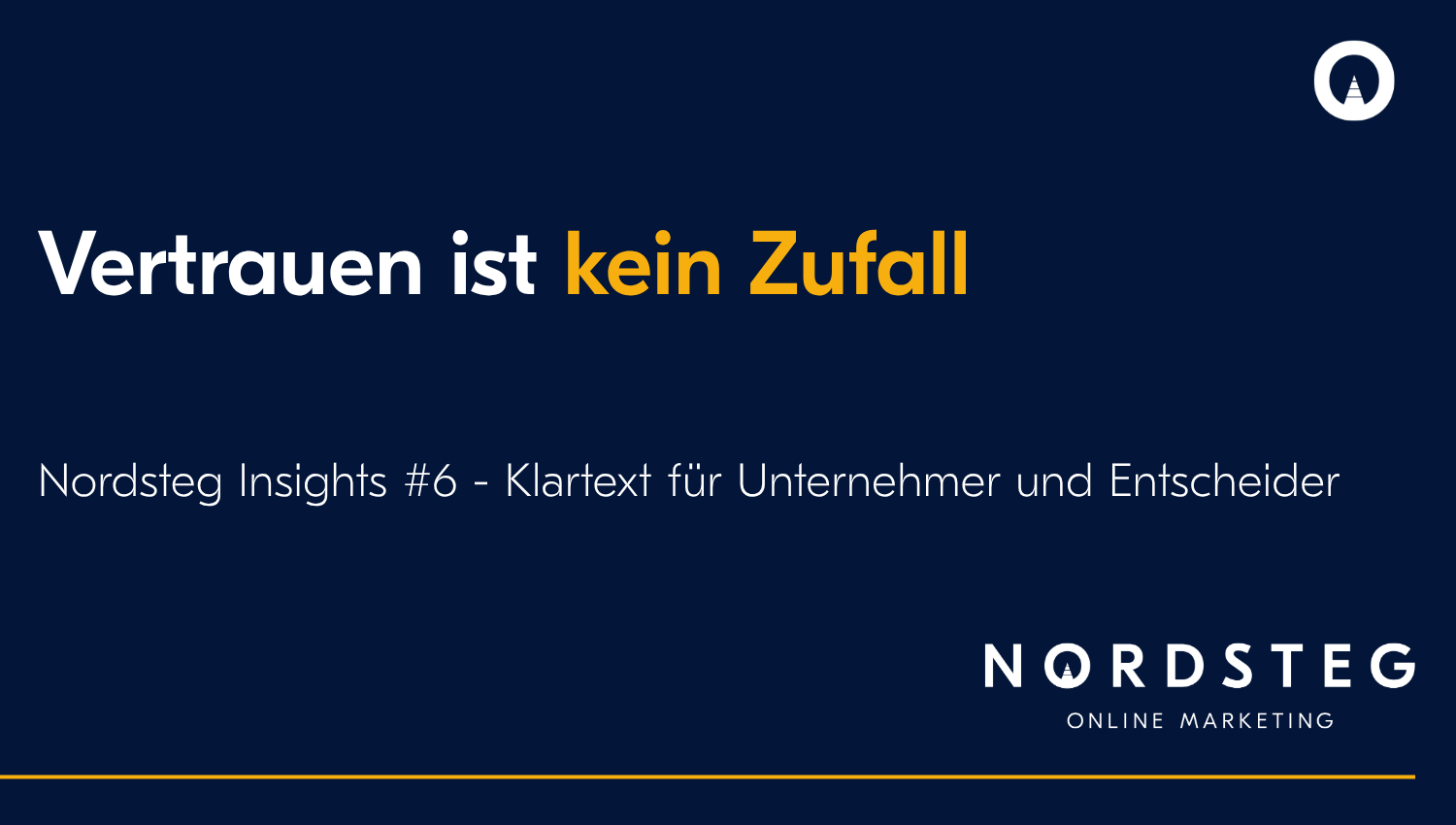
Trust Is No Coincidence - It Is the By-Product of Structure
According to the Deloitte Insights report "Customer Trust in the Technology Sector", customer loyalty grows by up to 30% in trust-based business relationships.
Table of contents 6 sections
Trust is not a feeling - it is the by-product of structure.
Companies that lead their systems reliably do not win customers, they keep them.
The blind spot in B2B trust
I remember a customer conversation in which everything went perfectly - until a simple question came up: "Why didn't you say so earlier?"
No mistake, no argument - just lost trust. Not because of incompetence, but because of missing structure.
Many companies believe trust comes from likability or personality. In truth, it comes from consistency: same quality, same communication, same stance - every day.
If this repeatability is missing, trust falls apart - no matter how good you are.
When trust breaks
Typical patterns:
- Communication changes depending on the contact person.
- Commitments are not documented.
- Reporting is irregular or unclear.
- Decisions hang on individuals.
When customers lose trust, it is rarely because of mistakes. It is because of missing systems that secure reliability.
Companies talk about relationships - but they run transactions.
The real cause: missing reliability
The core is simple - but brutal:
Trust is measurable reliability - not emotion.
People believe deeds, not words. Every interaction is a test of consistency. The less structure you have, the more energy you have to spend on explanations.
Leadership without systems is trust on call. And trust on call only works as long as everyone is present.
The path to effectiveness: the trust system
Phase 1: Clarity - make expectations visible. Don't expect anything you haven't documented. SLA, scope, reporting - writing creates trust. Phase 2: Constancy - rhythm instead of reaction. Weekly, monthly, QBR - no surprises, no coincidences. Trust grows in cadence, not in chaos. Phase 3: Context - explain impact. Numbers convince, but only when they carry meaning. Show results, but also frame them. Phase 4: Reflection - measure trust. Actively gather feedback, introduce NPS and pulse checks. Trust is not a soft factor - it is a KPI.
Structure creates security. Security creates trust.
The next generation of leadership
In future, no longer the loudest brands will win, but the most reliable systems.
Companies that lead trust systemically lose fewer customers - and gain more partners.
"Reliability is the new marketing."
If your most important customer left tomorrow - would the reason be a mistake or a missing system?
If you want to measure trust, do not count the mistakes - count the promises that were kept.
"Trust is no coincidence - it is the by-product of structure."
Is your website losing customers?
Our AI scans your website and delivers a professional analysis report - free of charge as a PDF via email.
Request free analysisNicolas Fabjan - Founder & CEO of Nordsteg OnlineMarketing
Plain talk for entrepreneurs - on systems, marketing and the future.