Tool Stack vs. Culture Stack: What SMEs Really Need
The tool reflex: why SMEs believe software solves everything
When digitalisation or GEO comes up, many SMEs react reflexively: buy new tools. Project management, analytics, content automation - the market is full. Yet instead of results, a growing tool landscape often emerges that is expensive and barely used.
Table of contents 9 sections
- 01The tool reflex: why SMEs believe software solves everything
- 02Infographic: the tool reflex
- 03What tools can do - and what they cannot
- 04What a culture stack is
- 05Infographic: tool stack vs. culture stack
- 06Comparison: must-have tools vs. must-have routines
- 07Comparison chart: tool stack vs. culture stack ROI
- 0890-day plan: from tool reflex to culture stack
- 09FAQ
Example (fictitious): a SaaS SME invests EUR 80,000/year in high-end tools. No routines, data not maintained, content not published. Result: 0 AI mentions, ROI negative.
Tools tie up resources for training, implementations and data maintenance. Without clear processes they become a burden. Harvard Business School (2,400 SMEs, 18 months): in 70% of digital projects, investments fail because of missing culture. Limitation: not GEO-specific.
Infographic: the tool reflex
The tool reflex: "We buy tool X, then everything will be good"
Wrong. Without a culture stack, tools fizzle out.
This article deepens the culture-vs-tech question from AI marketing transformation in B2B.
What tools can do - and what they cannot
Tools can:
Automation: reporting, content distribution
Monitoring: Ahrefs/SEMrush for backlinks, mentions
Transparency: dashboards for progress
Tools cannot:
Establish routines (publishing discipline)
Clarify responsibilities (who publishes what?)
Make leadership decisions (set priorities)
Is your website losing customers?
Our AI scans your website and delivers a professional analysis report - free of charge as a PDF via email.
Request free analysisA McKinsey survey of 1,200 companies shows: purely tool-driven transformations only achieve success half as often as culture-driven ones. Limitation: digital projects in general.
What a culture stack is
Culture stack = lived routines + clear responsibilities + binding KPIs.
Examples:
Publishing calendar: 1x/week GEO content (FAQ, best-of, Q&A)
Retention workflow: monthly reviews + optimisation
KPI dashboard: AI mentions in ChatGPT, Perplexity, Google AI Overviews + lead quality
Example (fictitious): an industry SME does without high-end tools. Instead: weekly cadence, monthly retention, transparent KPIs. Result after 6 months: 25 stable AI mentions, ROI clearly positive.
HBR analysis (2,000 digital projects): clear routines triple the success rate, even with minimal tool deployment. Limitation: GEO not separately analysed.
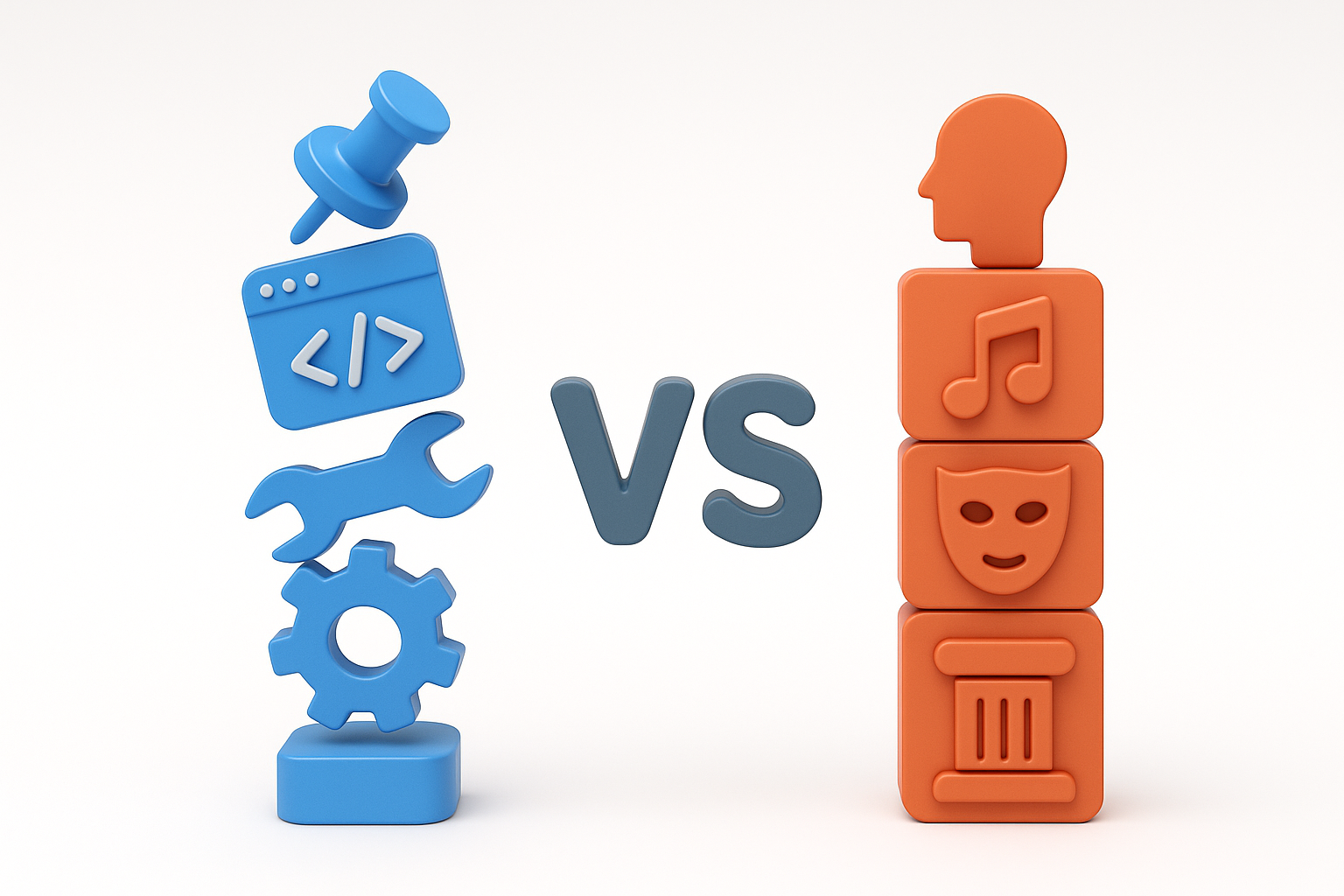
Infographic: tool stack vs. culture stack
Tool stack
= WHAT you use
Culture stack
= HOW you work
Tool stack without culture stack = 15% ROI
Both together = 240% ROI
Comparison: must-have tools vs. must-have routines
Area: content - tool stack: Trello, Asana - culture stack: weekly publishing rhythm
Area: monitoring - tool stack: Ahrefs, SEMrush - culture stack: KPI shift: AI mentions instead of keywords
Area: optimisation - tool stack: Notion, ContentKing - culture stack: monthly retention workflow
Area: reporting - tool stack: Data Studio, Power BI - culture stack: transparent KPI meetings
Cost factor:
Tool stack: EUR 50,000-80,000/year for licences + implementation
Culture stack: barely any extra cost - only clear responsibilities and leadership
ROI comparison:
SME A (tools only): EUR 80,000 → 0 mentions → ROI negative
SME B (hybrid): EUR 60,000 → 8 mentions → ROI +15%
SME C (culture stack first): EUR 30,000 → 25 mentions → ROI +50%
Comparison chart: tool stack vs. culture stack ROI
Culture stack multiplies tool ROI 16-fold
90-day plan: from tool reflex to culture stack
0-30 days: tool audit (what is used, what is a zombie?). Culture assessment. Quick win: cancel unused tools, shift budget to GEO publishing. 30-60 days: keep must-have tools. Start publishing rhythm. Clarify responsibilities. Check AI crawler access (allow GPTBot, PerplexityBot in robots.txt). 60-90 days: new KPIs: AI mentions, retention, lead quality. Feedback loops. Re-assessment.
Example (fictitious): an SME starts with 10 tools, uses only 3. After audit: stack reduced to must-haves. Weekly publishing rhythm. Result: 15 AI mentions/month, EUR 20,000 cost saving, ROI positive for the first time.
CTA: run the Nordsteg culture assessment and break the tool reflex.
All satellites at a glance:
FAQ
Do you need expensive tools for GEO?
No. Three must-haves are enough: project management, monitoring, dashboard. The culture stack decides success.
What is a culture stack?
The totality of lived routines, clear responsibilities and binding KPIs. It is what makes tools effective in the first place.
How do I recognise tool zombies?
Check which tools were actually actively used in the last 30 days. Everything else is a candidate for cancellation.
Can you achieve more results with fewer tools?
Yes. SMEs with a small tool stack but clear routines achieve up to 3x better results than tool-driven companies without culture.
What does the tool reflex cost annually?
SMEs typically burn EUR 20,000-40,000 per year on unused tools. This sum can be shifted directly into GEO publishing.