The GEO Culture Shift Framework: 3 Levels for Sustainable AI Visibility
Why culture decides GEO success
Many companies treat GEO as a technology question: deploy tools, set up dashboards, generate content. Experience shows the opposite: technology does not decide - culture does.
Table of contents 11 sections
- 01Why culture decides GEO success
- 02Infographic: Tech barriers vs. culture barriers
- 03Overview: GEO Culture Shift Framework
- 04GEO pyramid vs. GEO Culture Shift Framework
- 05Level 1 - Trust: leadership fosters AI experiments
- 06Level 2 - Content: systematic GEO publishing
- 07Level 3 - Engagement: retention & continuous improvement
- 08Workflow diagram: retention process
- 09Effect of the 3 levels on ROI
- 1090-day plan for introduction
- 11FAQ
Technical hurdles dissolve with budget and patience. Cultural blockers are invisible and last. They show up in silo thinking, fear of losing control and the fall-back into old SEO routines.
A Harvard Business School analysis with 2,400 SMEs over 18 months found: 70 % of failed transformation projects failed because of culture, not technology. Limitation: transformation in general. The MIT Sloan Management Review confirms: 62 % of 4,000 executives surveyed cited cultural blockers as the main reason. Limitation: self-assessment.
Infographic: Tech barriers vs. culture barriers
Tech barriers
✅ Solvable in 2-4 weeks
- Schema markup missing
- FAQ section too small
- No KPI dashboard
Culture barriers
⚠️ Takes 3-6 months
- Silo thinking
- No accountability
- Fear of transparency
👉 This article expands on the framework from AI Marketing Transformation in B2B.
Overview: GEO Culture Shift Framework
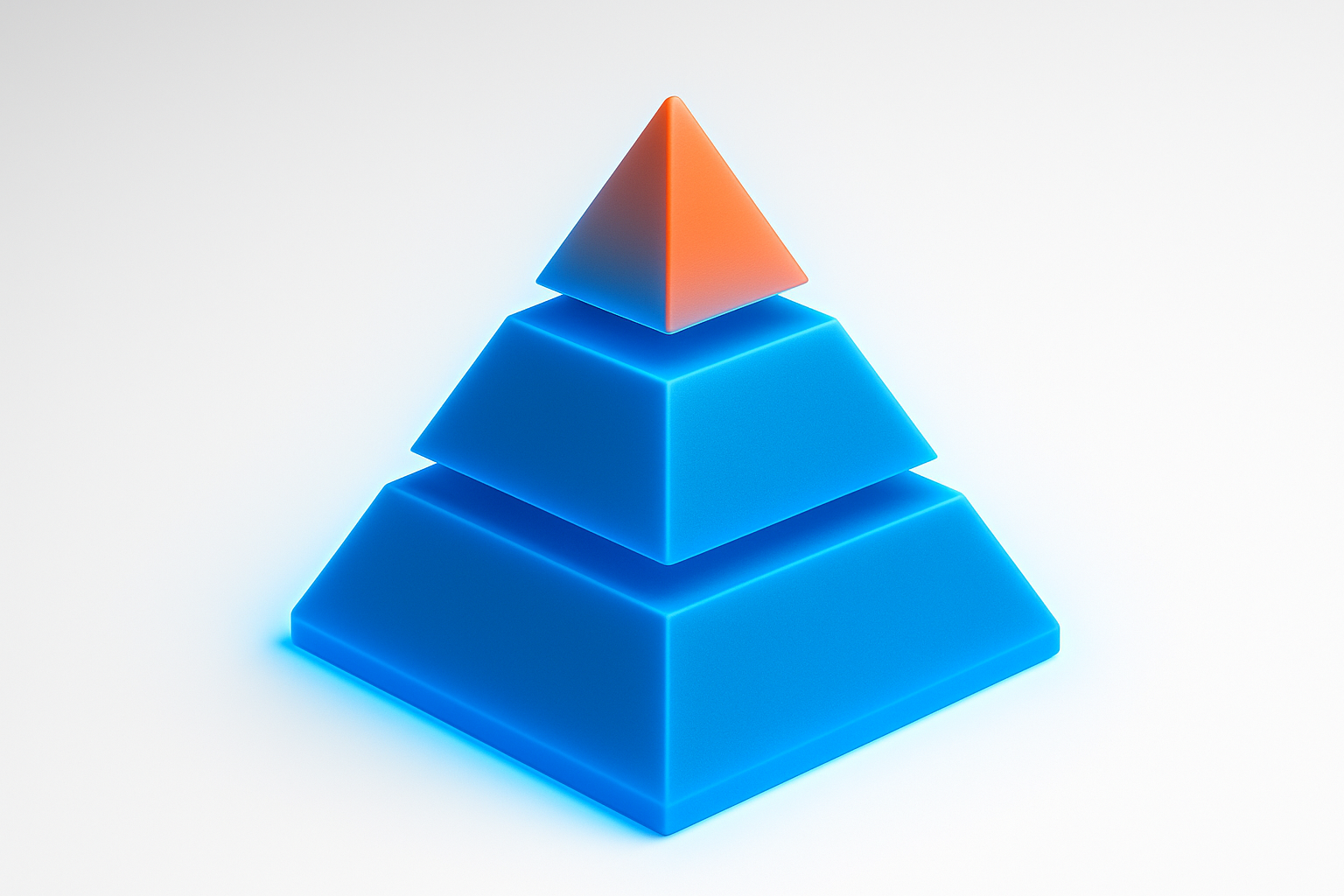
The framework builds on the Nordsteg GEO pyramid, extended by the cultural dimension. While the pyramid describes trust, content and engagement signals, the culture-shift framework shows how they are anchored through behaviour, routines and leadership.
Trust signals → cultural: leadership fosters transparency and psychological safety. Content signals → cultural: teams have fixed routines for systematic planning and publication. Engagement signals → cultural: feedback loops and optimisation are mandatory, not optional.
Crucial: not the tool stack but the culture stack. Many SMEs buy software without a cultural foundation - the tools lie idle, content processes peter out, GEO fails.
👉 Deep dive on tool vs. culture stack: Tool stack vs. culture stack for SMEs
GEO pyramid vs. GEO Culture Shift Framework
GEO pyramid
= WHAT gets optimised?
Trust → Content → Engagement
Culture Shift Framework
= HOW do we execute?
Mindset → Processes → Metrics
Pyramid without culture = theory without execution
Level 1 - Trust: leadership fosters AI experiments
Without trust every GEO project breaks down at the first irritation.
Psychological safety as a foundation: anyone testing new formats does not risk job or reputation. Mistakes are data points, not defeats. Leadership rewards transparency: instead of asking for keyword rankings, leadership must demand new KPIs: AI mentions, content frequency, retention success.
Example (fictitious): a mechanical engineering firm starts GEO publishing. The first two articles do not show up in ChatGPT. Instead of stopping, senior management signals: "We are learning and continue." After six weeks: stable mentions in ChatGPT and Perplexity.
A MIT study with 1,500 executives shows: companies with psychological safety double their success rate on AI projects. Limitation: focus on large enterprises.
Level 2 - Content: systematic GEO publishing
Unlike SEO, what counts is not volume but structure, consistency and relevance.
FAQ pages: answers to real customer questions, taken over directly by LLMs and AI crawlers (GPTBot, PerplexityBot, ClaudeBot). Best-of lists: structured overviews easily built into AI answers. Q&A pages: dedicated pages for individual questions - ideal for Google AI Overviews and SearchGPT.
Example (fictitious): a SaaS company first publishes irregularly - no effect. After introducing a weekly GEO rhythm: 15 AI mentions in 90 days.
A HBR study with 2,000 companies confirms: clear content routines = 3x more likely to be visible in emerging search channels. Limitation: GEO not isolated.
👉 Deep dive on the publishing process: AI Content SEO in B2B publishing
Level 3 - Engagement: retention & continuous improvement
A once-published article that is not maintained loses relevance after a short time. LLMs prefer current and consistent content.
Retention workflow:
Monthly review: what shows up in AI searches and what does not?
Optimisation: more precise FAQs, stronger trust signals.
Re-publishing: send fresh signals.
Example (fictitious): a consulting firm introduces a retention workflow. Monthly review of 10 articles, 3 optimised. Result after 6 months: +25 AI mentions, +30 % more leads - without any new content.
A MIT study with 800 companies confirms: clear feedback processes = 40 % more sustainable results. Limitation: GEO not separate.
👉 Deep dive on retention: Securing content in AI searches long term
Workflow diagram: retention process
Weekly
On updates
Immediately
Quarterly
Effect of the 3 levels on ROI
Trust lowers costs: less friction, less duplicate work. 20-30 % fewer hidden costs. Content speeds up go-lives: from 6 to 3 months. 2.1x higher transformation effects (McKinsey, 600 digital projects). Engagement raises lead quality: +35 % lead conversion through monthly content optimisation.
Together the three levels deliver an ROI lever that no tool stack can produce alone.
👉 ROI details: ROI of GEO culture
90-day plan for introduction
0-30 days: kick-off, culture assessment, quick win (first FAQ article). 30-60 days: cross-functional team, weekly publication, dashboard. 60-90 days: retention workflow, feedback loops, re-assessment.
👉 Detailed plan: 90-day plan for the GEO culture shift
📥 CTA: start the GEO culture assessment and get your company onto the GEO success path in 90 days.
FAQ
What is the GEO Culture Shift Framework?
An extension of the GEO pyramid that shows how trust, content and engagement are anchored culturally.
Why is technology alone not enough?
You can buy tools. Without trust, routines and feedback they remain ineffective.
What role does leadership play?
Leadership must create psychological safety, reward experiments and introduce new KPIs (AI mentions instead of rankings).
How quickly are results possible?
First AI mentions in ChatGPT, Perplexity and Google AI Overviews after 60-90 days with consistent execution.
Can the framework also work in small teams?
Yes. Small SMEs in particular benefit from shorter decision paths and faster routines.