Marketing Coaching: How to Avoid Dependence on Agencies
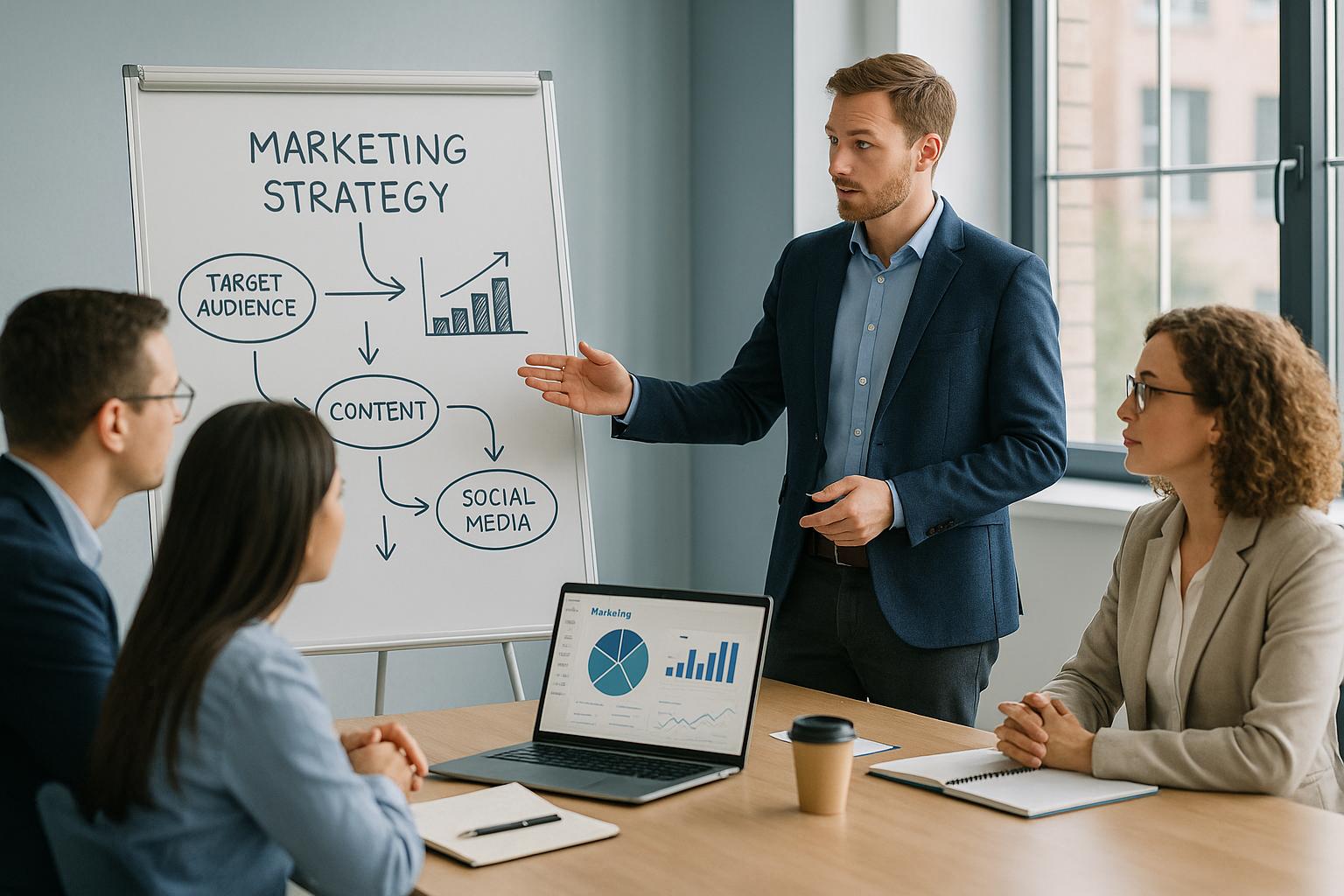
80% of Austrian SMEs rely on agencies for their marketing. But this dependence often costs more than money - it brakes flexibility, control and growth.
Table of contents 6 sections
- 01The solution: marketing coaching for internal competencies
- 02Frameworks and tools for independent marketing management
- 03Comparison: in-house management vs. agency dependence
- 04Create measurable success plans for sustainable growth
- 05Conclusion: achieving marketing independence with Nordsteg
- 06FAQs
With targeted marketing coaching you can break this dependence. Instead of financing external service providers, you build internal know-how that remains long term. That saves resources, raises efficiency and gives you full control over your marketing activities.
In this article you'll learn how, with clear strategies and the right use of tools, you can manage your marketing activities independently - without expensive agencies.
The solution: marketing coaching for internal competencies
Marketing coaching offers companies a targeted way to break free from dependence on external agencies. Instead of permanently hiring external service providers, through coaching, companies acquire the skills needed to manage their marketing activities independently. This approach strengthens self-responsibility and lays the foundation for long-term growth through internal knowledge and capability.
What marketing coaching achieves
In contrast to classic agency services, marketing coaching follows a completely different approach. While agencies take over operational tasks, coaching conveys the skills to plan and implement marketing strategies internally. The goal is clear: companies should be able to design and optimise their marketing activities independently.
A decisive advantage is cost control. Instead of regularly paying high fees to agencies, companies invest once in building knowledge that remains permanently available. The saved funds can flow directly into advertising instead of into external consulting services. And the best thing: the know-how acquired stays in the company and cannot be "lost".
Another advantage is the flexibility that internal marketing knowledge offers. Companies can react quickly to market changes, adjust campaigns and address opportunities or challenges in real time. This agility is a decisive competitive advantage.
In addition, marketing coaching enables a deeper understanding of their own audiences and markets. While agencies often rely on standardised solutions, through coaching companies develop individual approaches precisely aligned with their needs. This internal know-how ensures direct control and adaptability - and solves many of the typical problems associated with external agencies.
Nordsteg's strategy-oriented approach
Nordsteg follows a clearly structured and strategy-oriented approach that differs fundamentally from the way many agencies work. Instead of starting directly with the execution of campaigns, every collaboration at Nordsteg starts with strategic planning. That way no unconsidered experiments emerge but activities based on a sound strategy that deliver predictable results.
The Marketing Masterplan for €1,490 offers companies a compact foundation to quickly gain strategic clarity. In this process a detailed Buyer Persona and four concrete action recommendations that can be directly implemented are developed. This plan serves as a reliable guide for all further marketing activities.
For companies that need a more comprehensive strategic alignment, the Marketing Roadmap for €6,990 offers an intensive solution. In a two-day workshop, audiences, positioning and budget planning are precisely defined. The result is a detailed roadmap with clear priorities, documented in Notion and accessible at any time.
Nordsteg's approach clearly stands out from the typical approach of many agencies, which often start directly with campaign setup. Through the combination of thoughtful strategy and practical coaching, Nordsteg enables companies not only to receive a clear plan but also the knowledge to implement and further develop it independently.
The management of Google Ads or Facebook & Instagram Ads from €350 per month is based on this strategic foundation. That way targeted online marketing activities are implemented efficiently and effectively.
Frameworks and tools for independent marketing management
The path to independently steering your marketing requires more than determination - it needs clear structures and the right tools. Many companies make the mistake of starting directly with campaign execution without a solid foundation. That often leads to expensive experiments instead of predictable results.
Based on Nordsteg's strategic coaching, the frameworks and tools presented here offer a practical solution. With their help, companies in Austria can set up and optimise Google Ads campaigns specifically. Through the use of proven tools, a stable basis for long-term success emerges - all without dependence on external service providers.
Google Ads framework for Austrian companies
A structured framework is the key to successful Google Ads campaigns. This approach has proven itself in practice and takes into account the specific requirements of Austrian companies.
Phase 1: Strategic preparation The foundation of every campaign is a precise audience definition and keyword research. Use your marketing roadmap or masterplan to deploy existing Buyer Personas and identify relevant local keywords. Terms like "Vienna", "Salzburg" or "Austria" can significantly raise the local relevance of your ads.
Phase 2: Campaign structure Create a separate campaign for each product category. Within the campaigns, ad groups should be organised by keyword clusters. Each group should contain at least three ad copy variants to test different approaches. This structure not only makes management easier but also delivers clear data for analysis.
Phase 3: Budget and bid management A rule of thumb for the daily budget: set 10 times the average click price. For B2B companies that usually means between €20 and €50 per day.
Phase 4: Tracking and conversion measurement Correct Conversion Tracking is indispensable. Without this data, the success of your campaigns remains unclear. Set up Google Analytics 4, Google Ads Conversion Tracking and if necessary Google Tag Manager to capture all relevant information.
After the first two-week runtime, the optimisation phase begins. Use the collected data to pause inefficient keywords, further develop successful ad copy and adjust bids based on conversion data.
Tools for effective campaign management
The choice of the right tools is decisive for making your work efficient and purposeful. Besides Google Ads itself, there are numerous tools that extend your options.
- Google Ads Editor: This free desktop tool enables fast changes at large scale, like editing extensive keyword lists or ad copy. It saves time and ensures clear management.
- Notion: An ideal tool for documentation. Here you can centrally store campaign strategies, keyword lists, ad copy and optimisation logs. That way the knowledge stays in the company - even with staff changes.
- Keyword research tools: A combination of Google Keyword Planner, Ubersuggest and Answer The Public offers comprehensive insights. While the Keyword Planner shows search volume and competition, Ubersuggest delivers content ideas and Answer The Public uncovers common questions of your audience.
- Google Analytics 4: The indispensable instrument for success measurement and optimisation. With the right setup - including conversion goals and custom events - you get deep insights into user behaviour.
- Google Tag Manager: This tool makes managing tracking tags easier. Changes can be made without support from a developer, saving time and costs.
- Reporting tools: Google Data Studio (now Looker Studio) offers automated reports and thus saves hours of manual work per week. For more complex requirements, Supermetrics can be a helpful addition.
In addition, depending on need, further tools like Optmyzr for automated optimisation, SEMrush for competitor analysis or Hotjar for the analysis of user behaviour on your website can be used.
The costs for these tools are about €100 to €300 per month - significantly less than agency fees. At the same time they offer you a control and flexibility that external service providers often can't provide.
However, simply using tools isn't enough. You need trained staff and a structured approach. That's where the added value of marketing coaching comes into play: it conveys not only technical knowledge but also the strategic mindset needed for sustainable success. With these structures and instruments you create the foundation for the next step: the comparison of in-house management and agency dependence.
Comparison: in-house management vs. agency dependence
The tools presented make one thing clear: independent marketing management offers long-term control and planning security, while agencies often deliver short-term solutions. The decisive difference lies less in costs and more in the permanent control and transparency of the activities. Below the central comparison factors are examined.
Central comparison factors
A comparison between in-house management and collaboration with agencies shows differences in several areas:
Cost structure and transparency Agency services can cause high and hard-to-trace costs. In contrast, in-house management requires a manageable investment in tools and coaching. In addition you have direct insight and full control over how your marketing budget is deployed.
Speed, flexibility and knowledge building Agencies often serve multiple customers simultaneously, which can lead to delays in coordination. Internal teams, on the other hand, react faster and more flexibly. At the same time, knowledge about audiences and strategies stays in the company and grows continuously - an advantage often lost with external management.
Strategic alignment Agencies often focus on the operational execution of individual campaigns. In contrast, an in-house approach enables marketing activities to be planned strategically and aligned specifically to company goals.
| Factor | In-house management | Agency dependence | | Costs | Tool and coaching fees | Ongoing fees, often with extras | | Reaction time | Direct adjustments, high flexibility | Delays through coordination processes | | Budget control | Full transparency over fund use | Often opaque costs | | Knowledge building | Know-how stays in-house and grows continuously | Knowledge stays external at the agency | | Strategic control | Steering through masterplan or roadmap | Focus on short-term execution |
Long-term perspective Companies that rely on in-house management and strategic coaching benefit long term. They develop a deep understanding of their audience, can specifically plan seasonal changes and continuously optimise their strategies. This approach offers a solid foundation for sustainable growth and better control over their own marketing activities.
Create measurable success plans for sustainable growth
The step to independently steering your marketing activities requires a clear and structured plan. Only with concrete success criteria can you objectively evaluate your strategies and secure long-term growth. Here you'll learn how to break down your marketing strategy into measurable and actionable steps.
Steps to building your success plan
A thoughtful marketing plan always starts with a sound strategy - and not with the direct execution of campaigns. This approach distinguishes sustainable success from short-term experiments that often disappoint.
Set goals and define KPIs Set clear, measurable goals for a period of six to twelve months. Important KPIs could, for example, be the number of qualified leads per month or a certain percentage of revenue growth online. Such concrete values help you continuously review the success of your activities.
Plan budget sensibly For Austrian SMEs it's important to define a budget covering both regular spending on tools and advertising costs. A one-off investment in strategic coaching or the creation of a Marketing Masterplan can quickly pay off, as it often saves agency costs. At Nordsteg we place great value on first starting with a clear masterplan or Marketing Roadmap before operational activities are executed.
Set timeline and milestones Create a realistic timeline with clear milestones. First results at Google Ads can often already be visible after a few weeks, while SEO activities need several months. Check short-term KPIs after one month, evaluate goals quarterly and analyse progress over six to twelve months.
Ongoing optimisation and reporting
The key to long-term success lies in continuous improvement. Successful in-house teams stand out by regularly adjusting their strategies and reacting to new developments.
Monthly performance checks Conduct a structured analysis of your marketing activities every month. Use standardised reports to clearly present KPIs like ad spend, generated leads, conversion rates and Return on Ad Spend (ROAS). That way you recognise trends early and can counter-steer if needed.
Adjust and scale strategies Use the insights from your analyses to optimise your activities. Successful campaigns should be gradually scaled up, while inefficient activities are reworked or discontinued. The advantage of independent management lies in the ability to react quickly and flexibly to changes.
Build and document knowledge Consistently document your experiences and optimisations. This knowledge becomes a valuable part of your company and remains long term - in contrast to external know-how that's often lost. Companies that continuously better understand their audiences can align their marketing activities ever more precisely.
At Nordsteg we rely on a clearly structured approach: first a Marketing Masterplan or roadmap is created, before activities are executed. This approach ensures not only predictable results but also strengthens your independence.
The combination of careful planning and continuous optimisation is the key to sustainable marketing success. That way you create the foundation for long-term independence and reliable results.
Conclusion: achieving marketing independence with Nordsteg
Dependence on external marketing agencies doesn't have to be the rule for Austrian companies. With the right strategy you can steer your marketing activities yourself, lower costs and regain control over your results. A clear and thoughtful approach is the key to designing your marketing efficiently and purposefully.
At Nordsteg exactly this approach is at the centre. Every project starts with a Marketing Masterplan or Marketing Roadmap, before operational activities are executed. This structured approach ensures transparency and steerability - two decisive factors for sustainable success.
Through this process you gain a sound understanding of your audiences, learn to use the most important tools and are able to independently optimise your campaigns. That way you not only save costs but can also react flexibly to changes in the market.
Nordsteg's Marketing Coaching combines expert knowledge with the option to take your strategies and budgets into your own hands. Through targeted knowledge transfer and practical support, you gradually build the capabilities you need for long-term success.
The path to independence requires an investment in knowledge and strategy. But this investment often pays off after just a few months: you gain control, reduce your spending and remain agile in a dynamic market environment.
With Nordsteg you have a partner at your side that supports you in achieving sustainable growth - with clearly predictable results instead of expensive experiments.
FAQs
How can a company ensure that marketing know-how stays internal and is used long term?
To permanently establish marketing knowledge in the company, it's important to specifically develop internal capabilities. Marketing coaching offers an excellent way to train the team and minimise dependence on external agencies. With clear strategies, such as the creation of a Google Ads framework, and the use of user-friendly tools, companies can manage their campaigns independently and efficiently.
Another central point is the documentation and regular review of processes. That way you ensure the acquired knowledge isn't lost and is applied long term. The result: more independence and predictable results precisely aligned with the respective goals and available budget.
How can a company successfully switch from dependence on marketing agencies to independent marketing management?
The transition to independent marketing management requires a clear structure and thoughtful planning. The first step is the development of a Marketing Masterplan or roadmap. With it you set your goals and activities and create a solid foundation for measurable results.
Another important building block is marketing coaching. With it you build the necessary knowledge directly in your company. That way you retain control over your campaigns and can establish processes that work long term and at the same time fit your budget and growth ambitions. You should avoid short-term experiments - the focus lies on a strategy designed for the long haul.
Nordsteg supports you in becoming step by step more independent of external agencies. We develop a tailored strategy together with you and strengthen your team through targeted coaching. That way a stable foundation for sustainable growth and long-term success emerges.
What challenges are there when introducing in-house marketing and how can they be mastered?
The introduction of an internal marketing approach often brings some hurdles, especially when it comes to building the necessary expertise in the team. Targeted marketing coaching and practice-oriented training can provide a remedy. These measures enable your employees to execute campaigns independently and efficiently.
Another difficulty lies in developing a clear and actionable strategy and choosing suitable tools. An experienced marketing coach can support here by developing a structured plan precisely tailored to your company goals and budget. With it you lay a stable foundation for sustainable success.
Equally decisive is the ability to react flexibly to changes in the market and continuously develop. With the right guidance and a thoughtful approach, companies can manage their marketing activities independently long term and reduce dependence on external agencies.